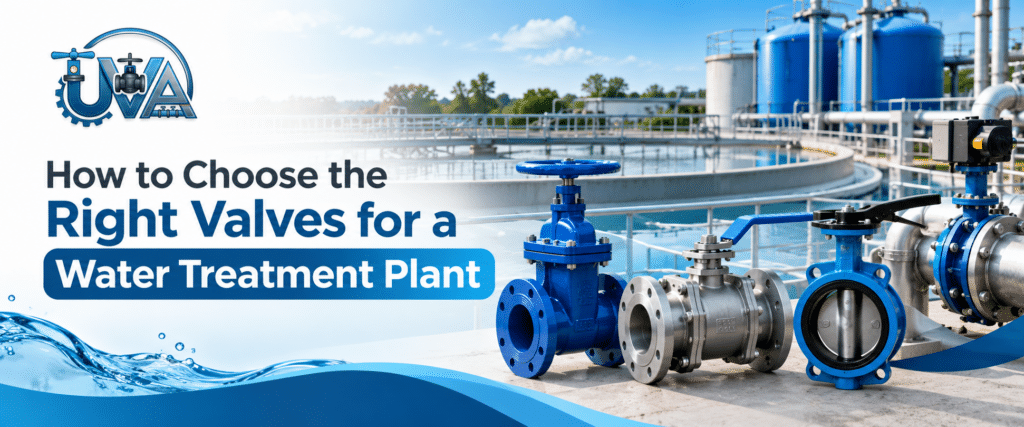
Selecting the right hardware is essential to keep your facility running smoothly and safely. Selecting the right water treatment valves requires a deep understanding of process conditions, material compatibility, and long-term lifecycle costs. By aligning these factors with your specific automation needs, you can avoid costly equipment failures and downtime.
This guide provides a practical roadmap to help your team navigate the complexities of infrastructure upgrades. We will walk you through everything from initial process mapping and sizing to final supplier reviews. Whether you manage water treatment plant valves or optimize high-pressure systems, we aim to simplify your decision-making.
We also include a dedicated comparison of globe, gate, and piston models to help you choose the best valves for water treatment plants on steam lines. Let’s get started building a more reliable, efficient system for your facility.
Key Takeaways
- Prioritize material compatibility to prevent corrosion and extend equipment lifespan.
- Always match the valve function to your specific pressure and flow requirements.
- Consider total lifecycle costs rather than just the initial purchase price.
- Use our comparison guide to choose between globe, gate, and piston designs for steam.
- Follow a structured approach from process mapping to final installation planning.
Define the Water Treatment Process and Valve Requirements
Effective water treatment valve selection isn’t about picking a brand; it’s about understanding your process. Many engineers choose familiar designs before analyzing their facility’s specific needs. By mapping your system first, you ensure that every component serves a clear purpose.
Map Each Process Stage Before Selecting a Valve
Every stage of your plant requires a unique approach to flow management. Evaluate each section’s specific demands to ensure long-term reliability.
Identify Intake, Pretreatment, Filtration, Disinfection, Sludge, and Distribution Lines
Your system flow starts at the intake and moves through several critical phases. Each area requires specific water treatment plant valves to handle the varying nature of the fluid:
- Intake and Raw Water: Needs robust hardware to handle debris.
- Pretreatment and Filtration: Requires components that manage sediment and backwash cycles.
- Disinfection and Chemicals: Demands materials resistant to harsh dosing agents.
- Sludge and Wastewater: Needs specialized designs to prevent clogging.
- Distribution: Focuses on maintaining consistent pressure for the end user.
Separate Isolation, Throttling, Check, Pressure-Control, and Safety Functions
Once you map the stages, you must define the function of each valve. Isolation valves are essential for maintenance, while throttling units manage flow rates. You also need check valves to prevent backflow and safety valves to protect against overpressure.
Document Pressure, Temperature, Flow, and Media Conditions
Data is the foundation of a successful installation. Record the physical and chemical properties of the media moving through your pipes to avoid premature failure.
Account for Clean Water, Raw Water, Chemicals, Slurry, and Wastewater
The media type dictates your material choices. For instance, handling abrasive slurry requires different wear-resistant materials than clean water. Later in this guide, we will compare globe, gate, and piston valves for steam lines, which often serve as critical heat sources in these processes.
Record Normal, Minimum, Maximum, and Emergency Operating Conditions
Always document the full range of your operating environment. A valve that works perfectly under normal flow might fail during an emergency surge. Recording the maximum and minimum thresholds helps ensure your water treatment valves remain safe and functional under all conditions.
Valves for Water Treatment Plants: Match Valve Types to Their Jobs
Matching the correct valve type to your specific process needs is the most effective way to ensure long-term operational success. When working with industrial water treatment valves, consider the media’s physical properties and the system’s mechanical demands. While some valves are designed for simple isolation, others are built to handle harsh chemicals or abrasive solids.
Select Gate Valves for Full-Open or Full-Closed Isolation
Explain When Wedge Gate and Resilient-Seated Gate Valves Are Appropriate
Gate valves for water treatment are the industry standard for on-off service. Wedge gate designs provide a robust seal in high-pressure lines, while resilient-seated gate valves offer a bubble-tight shutoff that is essential for clean water applications. These valves are highly reliable when fully open or fully closed.
Describe Why Gate Valves Are Usually Poor Choices for Throttling
Avoid using gate valves for flow regulation. The gate can vibrate and chatter when partially open, causing premature wear and potential seat damage. This instability makes them a poor choice for throttling compared to globe valves, which are often preferred for steam lines where precise control is required.
Use Butterfly Valves Where Space, Weight, and Cost Matter
Compare Wafer, Lug, and Double-Flanged Configurations
Butterfly valves for water treatment are excellent when you need a compact solution. Wafer designs are lightweight and easy to install, while lug and double-flanged configurations provide better support for larger pipe diameters. These valves are cost-effective and require minimal space in crowded piping galleries.
Address Disc Corrosion, Pressure Drop, and Seat Compatibility
Because the disc remains in the flow path, you must account for potential pressure drops. Select materials that resist disc corrosion, especially in aggressive water environments. Always verify that the seat material is compatible with your specific chemical additives to prevent leaks.
Choose Ball Valves for Tight Shutoff and Smaller Process Lines
Compare Full-Port and Reduced-Port Designs
Ball valves provide an excellent, tight shutoff for smaller process lines. Full-port designs allow for unrestricted flow, which is ideal for minimizing pressure loss. Reduced-port designs are often sufficient when a slight restriction doesn’t affect overall system performance.
Consider Chemical Compatibility, Cavity Pressure, and Actuation
When selecting these valves, consider the potential for trapped pressure within the ball cavity. Proper venting or specialized seat designs can mitigate this risk. Also, ensure the actuation method can handle the torque requirements of your specific chemical service.
Apply Plug, Diaphragm, Pinch, and Knife Gate Valves to Difficult Media
Use Diaphragm and Pinch Valves for Corrosive or Abrasive Services
For highly aggressive media, corrosion-resistant valves like diaphragm and pinch designs are essential. These valves isolate the internal mechanical parts from the process fluid, which significantly extends their service life. They are ideal for handling chemical dosing lines where traditional metal-on-metal seals would fail.
Use Knife Gate Valves for Sludge, Solids, and Thick Waste Streams
When handling heavy waste, sludge valves such as knife gate valves are necessary. The sharp blade cuts through solids to ensure a clean closure, preventing debris from jamming the mechanism. This makes them the preferred choice for thick waste streams where other valve types would quickly clog.
Choose Flow-Control and Protection Valves for Reliable Operation
Reliable plant operation depends heavily on selecting the right valves for flow regulation and system protection. These components act as the heartbeat of your facility, ensuring that water moves safely and efficiently through every stage of the treatment cycle. High-quality flow control valves help you maintain consistent output while protecting your infrastructure from unexpected surges.
Use Globe Valves When Precise Flow Regulation Is Essential
When you need to adjust flow rates with high accuracy, globe valves for water treatment are the industry standard. Their unique internal design allows fine-tuned adjustments that other valve types can’t match.
Evaluate Linear Throttling Performance and Pressure-Loss Tradeoffs
These process control valves provide excellent linear throttling, making them ideal for applications where flow must be modulated frequently. However, a globe valve’s internal path naturally resists flow. You must balance this need for precision against the inherent pressure loss that occurs when the fluid changes direction.
Consider Globe Valve Trim for Pressure, Cavitation, and Noise Control
Advanced trim designs help reduce the risk of cavitation and excessive noise during high pressure drops. By selecting the right plug and seat configuration, you can significantly extend your equipment’s lifespan. This level of control is also vital when comparing these units to steam-line valves, where regulation is a key selection criterion.
Select Check Valves to Prevent Reverse Flow and Equipment Damage
Protecting your pumps and filters from backflow is a critical safety requirement. Properly specified check valves for water treatment ensure fluid moves only in the intended direction, preventing costly damage to sensitive components.
Compare Swing, Lift, Wafer, Dual-Plate, and Silent Check Valves
Each design offers specific benefits depending on the installation environment. Swing and lift valves are common, but wafer and dual-plate designs often offer a smaller footprint. Silent check valves are particularly effective at minimizing noise and vibration in high-velocity lines.
Prevent Water Hammer by Matching Closure Speed to the Pipeline
Water hammer occurs when a valve closes too quickly, sending a shockwave through the piping system. Prevent this by matching your check valve’s closure speed to your pipeline’s specific dynamics. Slow-closing mechanisms are often the best choice for protecting long-distance distribution networks.
Specify Pressure-Reducing, Relief, and Surge-Control Valves
Maintaining stable system pressure is essential for the longevity of membranes and filtration media. Specialized pressure control valves let you manage fluctuations before they affect downstream equipment.
Protect Pumps, Membranes, Filters, and Distribution Piping
Relief valves act as a safety net, venting excess pressure to prevent pipe bursts or equipment failure. Surge-control valves are equally important, as they dampen the impact of sudden pump starts or stops. These devices keep your entire system within safe operating limits.
Coordinate Valve Setpoints With Pump Curves and System Pressure
Effective protection requires aligning your valve setpoints with your facility’s specific pump curves. If the setpoints are too close to normal operating pressure, you may experience nuisance tripping. Careful calibration ensures your safety valves activate only when truly necessary.
Choose Control Valves and Actuators for Automated Treatment Systems
Modern facilities rely on automated water treatment valves to maintain efficiency without constant manual intervention. Integrating smart actuators lets your control system respond instantly to real-time data.
Compare Pneumatic, Electric, Hydraulic, and Manual Actuation
Pneumatic actuators are favored for their speed and reliability in hazardous areas. Electric actuators offer precise positioning and integrate more easily into digital control networks. While manual overrides are always recommended for emergencies, automated systems provide the consistency required for large-scale operations.
Match Positioners, Fail-Safe Modes, and Control Signals to Plant Operations
The positioner choice determines how accurately the valve responds to control signals. You must also define the fail-safe mode—whether the valve should stay open, close, or hold its position during a power loss. Proper configuration keeps your plant safe and operational under all conditions.
Which Valve Is Best for Steam Lines? Comparing Globe, Gate, and Piston Valves
Choosing the best valve for steam lines means balancing precise control with tight shutoff. Steam systems operate under extreme conditions, so selecting the right valve is vital for safety and performance.
Use Globe Valves When Steam Flow Must Be Throttled
Explain Their Strong Modulating Performance and Higher Pressure Drop
Globe valves are the industry standard for applications requiring precise flow regulation. Their internal design enables excellent modulation, though it comes with a higher pressure drop than other types.
Review Globe Valve Body Patterns, Trim Materials, and Control Applications
These valves feature various body patterns, such as straight, angle, or Y-pattern, to suit specific piping layouts. Engineers often select hardened trim materials to resist erosion from high-velocity steam.
Use Gate Valves for Low-Resistance Steam Isolation
Explain Why Fully Open Gate Valves Minimize Pressure Loss
When the goal is simple isolation, gate valves are often preferred. In the fully open position, they provide a straight-through flow path that minimizes pressure loss across the system.
Warn Against Partially Open Operation, Vibration, and Seat Damage
Avoid using gate valves for throttling. Partially open discs can vibrate severely, leading to premature seat damage and potential steam leaks.
Use Piston Valves for Tight Shutoff and Frequent Steam Cycling
Describe Their Sealing Action and Resistance to Thermal Shock
Piston valves utilize a unique sealing ring that provides a tight shutoff, even after many cycles. They resist thermal shock, making them ideal for systems that experience frequent temperature fluctuations.
Evaluate Maintenance Access, Installation Orientation, and Lifecycle Cost
These valves offer excellent maintenance access, as the internal components can often be replaced without removing the valve body from the line. While the initial investment may be higher, their long service life often results in a lower total lifecycle cost.
Compare Globe, Gate, and Piston Valves by Steam-Line Requirement
Choose Globe for Regulation, Gate for Isolation, and Piston for Cycling
Selecting the best valve for steam lines depends on your specific operational goals. Use the following table to guide your decision-making process:
| Valve Type | Primary Strength | Best Application |
| Globe | Modulation | Flow Regulation |
| Gate | Low Resistance | Full Isolation |
| Piston | Tight Sealing | Frequent Cycling |
Check Pressure Class, Temperature Rating, Steam Quality, and Drainage
Always verify that the valve pressure class and temperature rating exceed your maximum system conditions. High-quality steam requires proper drainage to prevent water hammering, which can destroy even the most robust valves.
Include Steam Traps, Strainers, Expansion Allowance, and Burn Protection
To ensure a long-lasting installation, consider these essential components and safety measures:
- Install steam traps to remove condensate effectively.
- Use strainers to protect valve seats from pipe scale and debris.
- Account for thermal expansion in your piping design.
- Apply insulation or guards to provide burn protection for personnel.
Size Valves and Select Materials for Water Treatment Conditions
Selecting the right hardware for your facility requires more than just matching pipe sizes. When you choose water treatment valves, consider the specific physics of your fluid lines to ensure long-term performance. Proper engineering prevents premature failure and keeps your plant running smoothly.
Calculate Valve Size From Flow Rather Than Matching Pipe Diameter Alone
Use Flow Rate, Pressure Drop, Velocity, and Valve Flow Coefficient
Many engineers assume a valve should always match the pipe diameter. Instead, calculate the required size based on flow rate and the allowable pressure drop across the valve. Using the valve flow coefficient (Cv) allows you to predict how the device will perform under real-world conditions.
Avoid Oversizing That Causes Poor Control or Undersizing That Restricts Flow
Oversizing a valve often leads to poor control because the valve may operate nearly closed. This causes instability and excessive wear on internal components. Conversely, undersizing restricts flow and creates unnecessary pressure drops that strain your pumps.
Choose Materials That Resist Corrosion, Erosion, and Chemical Attack
Compare Ductile Iron, Carbon Steel, Stainless Steel, PVC, CPVC, and Alloy Options
Choosing the correct valve materials for water treatment is vital for longevity. Evaluate the environment to determine whether your system needs high-strength metals or chemical-resistant plastics.
| Material | Best Use Case | Key Benefit |
| Ductile Iron | General water service | Cost-effective strength |
| Stainless Steel | Corrosive environments | High durability |
| PVC/CPVC | Chemical dosing lines | Excellent chemical resistance |
Verify Elastomer Compatibility With Chlorine, Ozone, Acids, and Coagulants
Internal seals and seats often fail first. Verify that your elastomers can withstand exposure to harsh disinfectants like chlorine and ozone. Using corrosion-resistant valves with the wrong seal material can cause leaks and safety hazards.
Review Pressure Classes, End Connections, and Applicable Standards
Match Flanges, Threaded Ends, Grooved Couplings, and Welded Connections
Match your connection type to the existing piping infrastructure to ensure a secure seal. Flanges are standard for larger lines, while threaded or grooved ends offer flexibility in smaller process areas. Always ensure the connection method supports the pressure rating of the entire system.
Check AWWA, ASME, ASTM, NSF/ANSI/CAN 61, and local code requirements
Compliance is non-negotiable in the water industry. Ensure all components meet NSF/ANSI/CAN 61 standards for drinking water safety. Always remember that steam-line valves require different pressure and temperature ratings than standard water-service equipment, so do not apply water-service assumptions to steam applications.
- Verify pressure class ratings against maximum system surge.
- Confirm all materials meet local building and safety codes.
- Document all certifications for your maintenance records.
Evaluate Installation, Maintenance, Safety, and Total Cost
Selecting the right hardware for your facility involves looking far beyond the initial price tag. Proper planning keeps your industrial water treatment valves functional and safe throughout their service life.
Plan Valve Placement for Access and Safe Maintenance
Provide Clearance for Handwheels, Actuators, Bonnet Removal, and Disassembly
Engineers must prioritize physical access during the design phase. If a technician cannot reach a handwheel or remove a bonnet, routine maintenance becomes a dangerous chore.
Always ensure there is enough overhead and side clearance for automated water treatment valves. This space allows for the easy removal of actuators and internal trim components without dismantling the entire piping system.
Install Isolation and Bypass Arrangements Where Continuous Service Is Necessary
Continuous operation is vital for modern plants. Bypass lines let your team repair sludge valves without shutting down the entire water flow.
This setup prevents costly downtime and keeps the treatment process moving smoothly. It is a smart investment that pays for itself during the first major service interval.
Reduce Failure Risk Through Correct Installation
Flush Piping, Protect Valve Seats, and Follow Flow-Direction Markings
Debris left in pipes after construction is a leading cause of premature seat failure. Always flush your piping thoroughly before installing new equipment to protect delicate internal seals.
Pay close attention to flow-direction arrows on the valve body. Installing a valve backward can cause erratic performance and damage to the internal mechanism.
Support Heavy Valves and Prevent Pipe Stress at the Valve Body
Heavy valves can exert significant force on pipe joints if they are not properly supported. Use pipe hangers or structural supports to ensure the valve body does not bear the weight of the piping.
This practice prevents misalignment and leaks. It is especially critical when using valve materials for water treatment that might be sensitive to mechanical stress.
Build Inspection and Maintenance Into the Selection Process
Compare Packing, Seat, Diaphragm, Trim, and Actuator Service Requirements
Maintenance needs vary significantly by design. Before purchasing, evaluate how often you will need to replace packing, seats, or diaphragms.
Components with longer service intervals reduce labor costs. It also reduces the risk of accidental chemical exposure during frequent teardowns.
Specify Position Indicators, Test Ports, Drain Connections, and Replacement Parts
Operational visibility is key to safety. Always specify position indicators so operators can confirm a valve’s status at a glance.
Including test ports and drain connections simplifies inspection. Furthermore, ensure that replacement parts are readily available from the manufacturer to avoid long lead times.
Compare Purchase Price With Total Cost of Ownership
Account for Energy Loss, Water Waste, Downtime, Repairs, and Expected Service Life
The cheapest valve often becomes the most expensive over time. High-quality valves reduce energy loss and prevent water waste, major factors in total cost of ownership.
Consider the cost of potential downtime and emergency repairs. A slightly higher upfront investment in durable materials usually results in a much lower lifetime cost.
Require Documentation, Warranties, Certifications, and Manufacturer Support
Always demand full documentation and clear warranties for your equipment. Reliable manufacturers provide the technical support needed to keep your systems running efficiently.
| Factor | Low-Cost Valve | High-Quality Valve |
| Initial Price | Low | High |
| Maintenance Frequency | High | Low |
| Expected Service Life | Short | Long |
| Energy Efficiency | Poor | Excellent |
When working with steam-line valves, remember that safety is paramount. Always choose materials that can withstand high temperatures and provide adequate insulation to prevent burn injuries during maintenance.
Apply a Practical Valve-Selection Checklist Before Ordering
A comprehensive checklist is your best defense against incompatible equipment and future maintenance headaches. Proper water treatment valve selection requires attention to detail to ensure long-term reliability. By following a structured process, you protect your budget and your plant’s operational uptime.
Confirm the Process Data for Every Valve Location
Verify Media, Flow Range, Pressure, Temperature, Solids Content, and Chemical Exposure
Before placing an order, document the exact conditions for each valve location. Account for the specific media, whether raw water, treated effluent, or chemical dosing fluids. Accurate valve sizing for water treatment depends on knowing the flow range and potential solids content that could cause clogging or erosion.
Record Whether the Valve Must Isolate, Modulate, Prevent Backflow, or Relieve Pressure
Clearly define the primary function of the hardware. Determine if you need process control valves for flow regulation or check valves for water treatment to prevent reverse flow. Knowing whether a valve must handle high-pressure surges or provide a tight shutoff is essential to choosing the right design.
Review the Technical Specification With Operations and Engineering Teams
Approve Valve Type, Size, Materials, Rating, End Connection, Actuator, and Fail Position
Collaboration between your engineering and operations teams prevents costly procurement errors. Ensure that the valve type, materials, and pressure ratings align with the system requirements. Always confirm the actuator’s fail position to maintain safety during power loss in water treatment plant valves.
Check Compatibility With Existing Controls, SCADA, Pumps, and Instrumentation
Integration is vital for modern automated systems. Verify that your chosen pressure control valves communicate correctly with your existing SCADA and instrumentation. This step ensures pumps and valves work together to maintain system stability.
Inspect Supplier Submittals Before Installation
Compare Certified Dimensions, Performance Data, Testing, and Compliance Documents
Never skip reviewing supplier submittals. Compare certified dimensions against your site drawings to avoid installation conflicts. Ensure all performance data and compliance documents meet industry standards before the equipment arrives on site.
Verify Spare Parts Availability and Commissioning Support
Long-term maintenance success depends on spare-part availability. Confirm that the supplier provides adequate commissioning support to help your team get the system running smoothly. Investing time in these checks now prevents significant delays later.
| Service Type | Recommended Valve | Key Advantage | Primary Use |
| Water Isolation | Gate Valve | Low Pressure Drop | Full Open/Close |
| Steam Throttling | Globe Valve | Precise Control | Flow Regulation |
| Steam Isolation | Piston Valve | Tight Shutoff | Frequent Cycling |
| Backflow Prevention | Check Valve | Automatic Action | Pump Protection |
Remember that both water treatment plants and steam lines require service-specific comparisons rather than generic purchasing decisions. Taking the time to evaluate each application ensures that your facility operates at peak efficiency for years to come.
Conclusion
Selecting the right equipment ensures your facility runs smoothly for years. Successful water treatment valve selection relies on matching specific hardware to your unique process demands. Define your service needs, size components based on actual flow data, and choose materials that resist harsh chemical environments.
Reliable operation depends on integrating the right technology into your piping layout. When managing steam, remember that globe valves provide excellent regulation. Gate valves offer efficient isolation, while piston valves handle frequent cycling and tight shutoff requirements. These steam-line valves play a vital role in maintaining system pressure and safety.
Your team should verify all technical specifications and automation requirements before finalizing any purchase. Reviewing supplier documentation and industry standards helps prevent costly installation errors. Investing time in these details ensures your water treatment plant valves deliver consistent results. Proper planning protects your infrastructure and keeps your water treatment plant valves performing at their peak.
FAQ
How do I choose the best valve for steam lines versus water service?
Selecting valves for steam lines requires a focus on temperature, pressure, and condensate management that differs from standard water treatment. For steam lines, a Globe valve is the superior choice for throttling and regulation, while a Gate valve is preferred for low-resistance isolation. If your system cycles frequently or needs high resistance to thermal shock, a Piston valve (often sourced from reliable brands like Velan or Spirax Sarco) provides the tightest shutoff and highest durability.
Why is it a mistake to size a valve based solely on the existing pipe diameter?
Sizing a valve by pipe diameter often leads to oversizing, which causes poor control, or undersizing, which creates excessive pressure drop. Instead, calculate the required size using the Flow Coefficient (Cv), the actual flow rate, and the media’s specific velocity. This ensures that equipment like control valves and actuators operate within their optimal range, preventing premature wear and cavitation.
When should I choose a butterfly valve over a ball valve in a treatment plant?
Butterfly valves are ideal for larger pipelines where space, weight, and cost matter most, especially in wafer or lug configurations. They work well for both isolation and basic throttling. However, for smaller process lines requiring bubble-tight shutoff and a clear flow path, Full-Port Ball Valves are often better, provided the materials are compatible with chemicals like chlorine or ozone.
Can gate valves throttle flow in water distribution?
Generally, no. Gate valves, including wedge gate and resilient-seated gate valves, are designed to be fully open or fully closed. Using them to throttle flow can cause severe vibration, seat damage, and turbulent flow. If you need precise flow regulation, a Globe valve is the industry standard because of its linear throttling performance, even though it results in higher pressure loss.
What valves are best for handling sludge, thick waste streams, or abrasive slurries?
For high-solids media, Knife Gate valves are excellent because they can “cut” through thick sludge to create a seal. Alternatively, Pinch valves and Diaphragm valves are preferred for corrosive or abrasive services because the operating mechanism is isolated from the media, reducing the risk of disc corrosion or mechanical failure.
How can I prevent water hammer and reverse flow damage to my pumps?
To protect your infrastructure, you must install high-quality Check valves. While swing check valves are common, Silent Check Valves or Dual-Plate designs often prevent water hammer better by matching closure speed to the pipeline’s deceleration. Additionally, coordinating surge-control valves with your pump curves provides a vital secondary layer of protection.
What industry standards should I verify before ordering valves for a municipal plant?
Ensure all selections meet relevant North American standards such as AWWA (American Water Works Association) for distribution, ASME for pressure ratings, and NSF/ANSI/CAN 61 for drinking water safety. For steam line valves, specifically verify ASME B16.34 ratings to ensure the body and trim materials can handle the high-temperature environment without compromising safety.
What is the benefit of a piston valve in a steam system compared to a traditional globe valve?
While the Globe valve is the king of modulation, the Piston valve excels in tight shutoff and durability during frequent cycling. Piston valves use a reinforced stainless steel piston and flexible valve rings that provide a large sealing surface, making them highly resistant to steam erosion and the stresses of thermal expansion and contraction.
How does the total cost of ownership (TCO) impact valve selection?
The initial purchase price is only one part of the equation. A professional analysis includes energy losses from pressure drops, water waste from leaks, and downtime costs. Investing in valves with high-quality elastomer compatibility and easy maintenance access (such as top-entry designs for bonnet removal) significantly reduces long-term expenses. It extends the plant’s expected service life.