
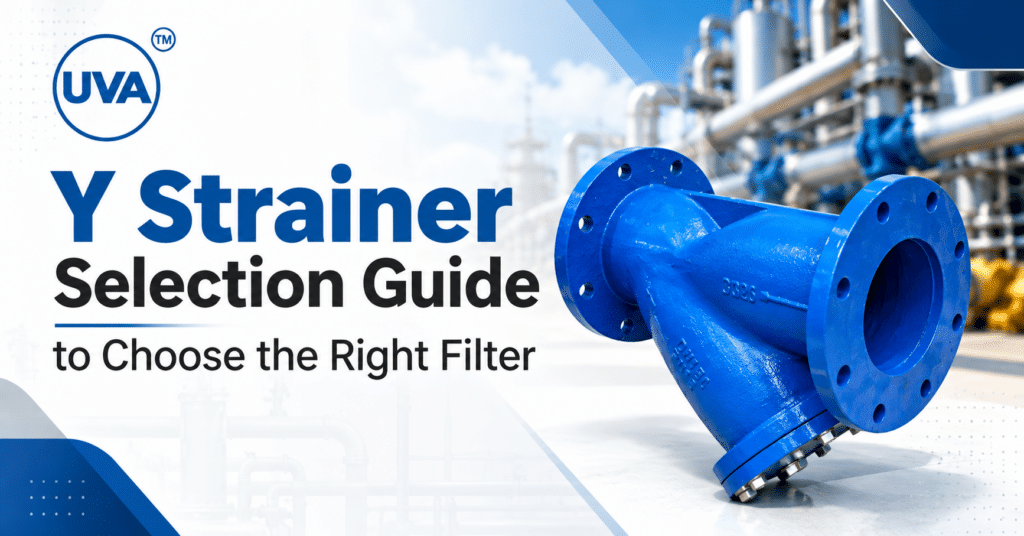
The proper selection of filtration equipment for steam and process piping systems is critical to long-term operational success. Our Y strainer selection guide equips you with a practical roadmap to confidently navigate complex technical requirements. Protect your downstream equipment from debris and expensive damage by focusing on the correct components.
The article also looks at the best valves for steam lines, comparing the particular benefits of globe, gate, and piston types. Important factors like service conditions, connection types, and material compatibility will be considered. The right pressure drop and maintenance requirements will keep your system running at its best.
Key Takeaways
- Understand the basic criteria for choosing the right Y strainer for your piping environment.
- Compare performance characteristics of globe, gate, and piston valves in steam applications.
- Understand how to test the durability of materials and their pressure ratings for long-term reliability.
- To prevent equipment failure, it is essential to have the correct size filtration openings.
- Find out about maintenance methods to help extend the life of your industrial filtration equipment.
How to Use a Y Strainer Selection Guide for Steam and Process Systems
The most important part of selecting the right equipment for your steam system is understanding how a Y strainer works. A Y strainer selection guide can help you keep your infrastructure free of harmful contaminants that lead to costly downtime.
A Y strainer functions as a mechanical filter in a piping system.
A Y strainer is a mechanical filter used to remove solid particles from flowing fluids. It has a tilted screen chamber that catches debris and keeps the process fluid moving through the pipe. This is a simple and very effective design, which is a staple in many industrial applications.
“Preventing damage is better than fixing it later, especially if it involves keeping delicate mechanical parts free from debris.”
Debris protection is essential for supporting the proper functioning of valves, pumps, and steam equipment.
Debris that gets into your lines can seriously damage precision components. A quality steam strainer will keep scale, rust, and pipe sediment from scoring the seats of your valves. This is particularly important when selecting valves for steam lines such as globe, gate, or piston valves.
Globe valves, which are susceptible to small particle damage, often achieve flow regulation. Gate valves also require clean seats to make a tight seal. Installing a strainer upstream extends the service life of these critical assets and ensures consistent operational reliability.
A Y strainer is preferable to a basket strainer in certain situations.
Both devices filter fluids but are used for different purposes. A Y strainer is generally more compact, making it the ideal choice for inline installations where space is at a premium. It’s designed to be easily installed in both horizontal and vertical piping runs.
Basket strainers (also known as bucket type strainers) have a higher collection capacity and are better suited for high-debris environments needing frequent cleaning. However, for normal steam service where the objective is to catch occasional debris on startup, the Y strainer is still the preferred solution. Always check your Y strainer selection guide to determine the configuration that you need to meet your specific pressure and flow requirements. You can also explore our full range of strainers, including the T strainer, to compare options.
Define the Piping Service Before Choosing a Y Strainer
Successful filtration begins long before you pick a model; it starts with defining your exact piping service needs. A Y strainer is not a universal component, and selecting the incorrect unit can result in early failure or system downtime.
Identify the fluid, temperature, pressure, and flow conditions.
First you have to document the exact characteristics of the medium that will be flowing through your lines. Materials specifications for water systems differ from those for steam at high pressure or volatile chemicals.
Check the maximum operating temperature and pressure limits of your equipment. If you have a very high flow rate, you need to make sure the pipe strainer doesn’t cause a significant pressure drop that would compromise the efficiency of your system.
Separate steam, liquid, gas, and corrosive-service requirements
Special difficulties arise in the steam service, which are quite different from those in liquids or gases. For steam line valves such as globe, gate, or piston valves, your filtration selection must protect these sensitive internal parts without restricting flow.
Some environments are corrosive and require special body materials and gasket types to prevent leaks. Always match the metallurgy of your strainer to the chemical properties of the fluid for long-term durability.
Account for startup debris, scale, rust, and process contaminants.
New piping systems often contain construction debris such as welding slag, sand, or metal shavings. These contaminants, if not captured during the initial start-up phase, can quickly damage downstream equipment.
Please confirm whether the installation requires continuous operation. A dependable pipe strainer acts as the initial barrier to prevent these particles from reaching your essential control valves.
Please confirm whether the installation requires continuous operation.
If your process cannot be shut down for maintenance, you have to plan for a duplex configuration or a bypass loop. This enables you to clean the Y strainer screen while the system is fully operational.
Without this redundancy, you’re looking at forced outages whenever that filter requires cleaning. With thought and planning, your maintenance schedule can be tailored to your production needs.
The importance of operating conditions exceeds that of nominal pipe size alone.
Many buyers make the mistake of choosing a filter based on the size of the pipe alone. But actual operating conditions—fluid velocity, potential debris load, etc.—are much more important for performance.
A Y strainer sized only by pipe diameter may not survive if the internal flow velocity is too high or the screen is not robust enough for the application. Always consider the specific requirements of your process first for the best protection of your valves and downstream equipment.
Choose the Correct Y-Strainer Size and Connection Configuration
Proper Y strainer installation begins with selecting the correct size and connection configuration for your specific application. If you choose the right hardware, your system will be efficient and won’t have unnecessary restrictions on flow. By addressing these physical requirements, you protect your downstream equipment from debris and maintain optimal pressure levels.
Match the strainer size to pipe diameter and required flow rate
The most common mistake is thinking the strainer must match the pipe size exactly. The nominal pipe diameter serves as a general guideline, but it is essential to consider the flow rate and pressure drop. If your process is high velocity, you might need a larger strainer to avoid excessive turbulence.
Compare threaded, socket-weld, flanged, and butt-weld connections.
The types of strainer connections to choose will depend on your piping material and the maintenance you will need. Flanged ends are simple to remove in larger systems, while threaded connections are ideal for smaller, low-pressure lines. Welded connections are used for high-pressure or hazardous services where a permanent leakproof seal is required.
| Connection Type | Best Use Case | Maintenance Ease | Pressure Rating |
| Threaded | Small, low-pressure lines | Moderate | Low to Medium |
| Flanged | Large, industrial systems | High | High |
| Socket-Weld | High-pressure piping | Low | Very High |
| Butt-Weld | Critical process lines | Low | Maximum |
Select inline or angle-body arrangements for the available space.
Space often dictates whether you go with an inline or angle-body design. Inline strainers are standard for straight pipe runs. However, angle-body models can be used as a 90-degree elbow to save space. Before you place an order, always check your layout against the existing piping footprint to be sure the body will fit.
Allow room for screen removal and blowdown access.
You need to leave enough space to pull the screen out to clean. If the strainer is positioned too close to a wall or another valve, it is difficult and time-consuming to service. Be sure there is sufficient space under the unit to install a blowdown valve for easy removal of debris.
How orientation affects steam, liquid, and gas installations
In steam systems, the strainer has to be mounted on its side to avoid condensate pooling. The screen pocket of a liquid line should be downward to trap sediment effectively. The gas installations should be located in such a way that moisture cannot collect in the screen area.
Why undersizing can increase pressure loss and maintenance frequency
Selecting a Y strainer that is too small can create a major bottleneck in your system. The restriction causes a higher pressure drop and makes your pumps or compressors work harder. Plus, the smaller screen fills with debris much more quickly, leading to more frequent and costly maintenance shutdowns.
Select Screen Mesh, Perforation, and Filtration Performance.
The trick is to balance the flow and screens to give you the best filtration performance. Your Y strainer internal parts are the first line of defense for your valves for steam lines and other delicate hardware.
Compare perforated screens with fine wire mesh liners.
Most standard strainers utilize a perforated metal screen. These are highly durable and work well for catching larger debris like pipe scale or welding slag. When you need to capture finer particles, a wire mesh liner is often added over the perforated base.
But the mesh is better for cleaning, but it reduces the open area of the screen. Understanding this trade-off is important when choosing your strainer screen mesh configuration.
Choose filtration openings based on downstream equipment protection.
The size of the openings should be determined by the sensitivity of the equipment you are protecting. Steam traps and control valves often require more refined filtration to prevent damage to the seat or clogging.
But you have to make sure the screen is heavy-duty enough to handle system pressure. Just make sure you check the manufacturer’s data to match the screen rating to the exact needs of your process.
Balance particle capture against pressure drop and flow capacity.
Each of the screens will cause some pressure drop in the fluid passing through it. A screen that is too fine will plug up quickly, resulting in a large increase in resistance and possible flow starvation.
You want the largest opening that will still protect your equipment adequately. This helps keep your maintenance intervals manageable and keeps your system running at peak efficiency.
Use temporary startup strainers when construction debris is expected
You will probably have a high amount of construction debris during the initial commissioning of a new piping system. In this phase, a temporary startup strainer is a cost-effective solution to protect your permanent equipment.
Once the system is flushed and clean, you can replace the temporary unit with your standard permanent screen. This simple step prevents premature damage to your valves and regulators.
Why the smallest possible opening is not always the best choice
Many operators mistakenly believe that a finer screen will always give better protection. Indeed, an overly fine screen can become clogged frequently and cause an excessive pressure drop, which can lead to a shutdown of the system.
Finding the right mix will bring long-term dependability without ongoing manual intervention. Compare typical screen configurations for your application using the following table.
| Screen Type | Primary Use | Durability | Flow Resistance |
| Perforated Only | Coarse Debris | High | Low |
| Mesh Lined | Fine Particles | Moderate | Moderate |
| Startup Strainer | Commissioning | High | Low |
Evaluate Materials, Pressure Ratings, and Temperature Limits
The safety and efficiency of your steam lines depend directly on your choice of body material and pressure rating. Choosing the right parts guaranties that your gear can withstand the harsh realities of industrial environments without early failure.
Compare cast iron, carbon steel, stainless steel, and bronze bodies.
The strength and resistance will depend on the material. Because of its durability, carbon steel is utilized for higher pressure applications while low pressure utility lines are often made of cast iron. Stainless steel Y strainers are commonly found in corrosive environments and high purity steam applications due to their enhanced oxidation resistance.
| Material | Best Use Case | Corrosion Resistance |
| Cast Iron | Low-pressure water/steam | Low |
| Carbon Steel | General industrial steam | Moderate |
| Stainless Steel | Corrosive/High-purity | High |
| Bronze | Marine/Water systems | High |
Check pressure class, maximum working pressure, and temperature rating.
All components must be rated for your specific system conditions. Always ensure that the strainer’s pressure rating is equal to or greater than the maximum operating pressure of your piping. If you ignore these limits, dangerous leaks or catastrophic ruptures can occur.
Match screen materials and gaskets to the process fluid.
Internal parts such as screens and gaskets must be compatible with the fluid to prevent degradation. Use of incompatible materials can cause failure of the screen at an early stage, damaging downstream valves of the globe, gate, or piston types. Always make sure your gasket material can handle the max temperature of your steam.
Consider corrosion, erosion, thermal cycling, and galvanic compatibility.
Metal components in steam systems can be stressed over time by thermal cycling. When connecting dissimilar metals, you have to consider galvanic corrosion. A stainless steel Y strainer can often help minimize these risks, as it provides a stable, inert interface within the piping.
Material considerations for saturated and superheated steam
Superheated steam demands materials that can withstand these extreme temperatures and maintain structural integrity. These harsh environments are usually carbon steel or stainless steel. Avoid materials that are brittle or that lose strength when exposed to continuously high heat.
How ASME, ASTM, and piping specifications affect selection
Compliance with ASME and ASTM standards is a regulatory and safety requirement. These specifications set the minimum standards for wall thickness and material composition. Following these standards will make your filtration equipment compatible with your existing valve configurations, whether it’s globe valves for control or gate valves for isolation.
Which Valve Is Best for Steam Lines? Comparing Globe, Gate, and Piston Valves
When designing steam distribution networks, choosing between a globe valve, gate valve, or piston valve can significantly impact your long-term maintenance costs. Selecting the correct hardware for your specific application ensures that your system remains reliable under high pressure and temperature.
How globe valves regulate and isolate steam flow
Strengths, limitations, and pressure-drop considerations
The globe valve is a workhorse in many industry applications. Its primary strength is its capacity to handle frequent operation and maintain a tight seal. For demanding steam duty, options such as pressure seal globe valves, forged steel globe valves, and bolted bonnet globe valves are widely used.
However, the internal design forces the steam to change direction, and this causes a significant pressure drop. You just need to accept this as a trade-off for precise control.
When a globe valve is the practical choice for throttling
Because of its seat design, this valve is the industry standard for throttling applications. It allows operators to adjust flow rates with high accuracy without damaging the internal components. Where zero stem leakage is required, bellow sealed globe valves are a good fit.
How gate valves provide low-resistance steam isolation
Why gate valves should not normally be used for throttling
Gate valves are intended for full open or full closed use. When you try to throttle steam with a partially open gate, high-velocity fluid causes vibration and erosion, resulting in premature failure.
Where rising-stem and non-rising-stem gate valves fit
Rising-stem models provide a clear visual indicator of whether the valve is open or closed. Non-rising-stem versions are ideal for tight spaces where overhead clearance is limited. For high-pressure steam isolation, consider pressure seal gate valves, forged steel gate valves, bolted bonnet gate valves, or bellow seal gate valves.
How piston valves perform in steam distribution systems
Sealing behavior, durability, and maintenance advantages
The piston valve has a special sealing arrangement and performs excellently in steam lines. A strong barrier formed by a piston moving through sealing rings withstands thermal cycling.
Maintenance is often simpler because you can replace the internal rings without removing the entire valve body from the piping system.
Situations where a piston valve may outperform a gate valve
In systems prone to frequent temperature fluctuations, the piston design maintains a better seal than a traditional gate. It is often the preferred choice for critical isolation points where leakage is not an option.
Compare globe, gate, and piston valves by function
Best options for isolation, regulation, cycling, and tight shutoff
“The right valve choice is not just about the initial price but about matching the mechanical design to the specific demands of the steam process.”
Use the following table to determine which valve fits your operational needs:
| Valve Type | Best For | Pressure Drop | Throttling |
| Globe Valve | Regulation | High | Excellent |
| Gate Valve | Isolation | Low | Poor |
| Piston Valve | Tight Shutoff | Moderate | Limited |
In the end, the selection of steam line valves should be based on the application. Whether you want the throttling of a globe design or the low-resistance flow of a gate, matching the hardware to the task is the key to a long-lasting system.
Pair the Y Strainer Ensure the arrangement of the steam line valves is correct.
A good steam-line valve arrangement begins with proper location of your filtration components. Correct installation of a steam strainer provides a reliable way of preventing scale and debris from damaging expensive internal parts.
Place the strainer upstream of control valves and sensitive equipment.
Always install your filter before any sensitive hardware to ensure maximum protection. By positioning the unit upstream, you capture contaminants before they reach delicate seats or diaphragms.
Use isolation valves to support safe screen cleaning.
It is much easier to maintain if you install isolation valves on each side of the filter. These steam line valves allow you to shut off flow completely for safe removal and cleaning of the screen without having to depressurize the entire system.
Determine when a blowdown valve is useful for steam service.
A blowdown valve is a smart addition for high-velocity steam lines. It allows for the quick discharge of accumulated debris without requiring a full system shutdown. Regular blowdowns help maintain optimal flow and prevent the screen from becoming overly clogged.
Configure bypass piping for continuous operation and maintenance
If your process cannot tolerate any downtime, consider installing a bypass line. With this setup, you can go around the filter with steam while you do maintenance, so your production can keep humming along while you work on the equipment.
Protect steam traps, regulators, control valves, and heat exchangers.
Clean steam is an asset to every downstream piece of equipment. Whether it’s protecting a heat exchanger or a sensitive regulator, the filter is the first line of defense against pipe scale and rust.
Typical arrangement for a steam control valve station
A well-designed steam control valve station typically features an isolation valve, followed by the strainer, and then the control valve itself. This sequence ensures that the control valve remains free of debris, which is vital for precise flow regulation.
Typical arrangement for a steam trap and condensate system
For condensate systems, place the filter immediately before the steam trap. This prevents small particles from lodging in the trap orifice, which is a common cause of steam leakage and energy loss.
This section explains how check valves and separators complement Y strainers.
Check valves are often used downstream to prevent backflow, while separators work alongside filters to remove moisture. Together, these components create a comprehensive protection strategy for your steam line valves and overall infrastructure. Depending on pressure class, you can choose from swing type check valves, pressure seal check valves, forged steel check valves, or dual plate check valves.
- Use globe valves for precise flow control.
- Choose gate valves for full-port isolation.
- Select piston valves for tight shutoff in high-pressure steam applications.
Calculate Pressure Drop and Plan Strainer Maintenance
You can significantly extend the life of your valves for steam lines by monitoring flow efficiency and performing regular upkeep. Understanding how your equipment handles fluid resistance is the first step toward a reliable process. By focusing on these metrics, you ensure that your entire piping network remains protected from unexpected downtime.
Read pressure-drop data at the expected flow rate.
It is a common mistake for many operators to select a filter based on the nominal pipe size. Instead, you need to refer to the manufacturer’s pressure drop charts at your actual design flow rate. These data provide a realistic representation of the energy lost by your system with fluid flowing through the screen.
Recognize the difference between a clean and clogged screen.
A clean screen offers minimal resistance, allowing steam or liquid to flow freely. As debris accumulates, the internal resistance rises, which can starve downstream equipment of necessary pressure. If you notice your valves for steam lines struggling to regulate flow, a dirty screen is often the hidden culprit.
Install differential-pressure indicators where monitoring is important.
Guessing is rarely a beneficial idea in high-stakes industrial environments. A differential-pressure gage across the inlet and outlet ports provides a real-time view of the condition of the filter. When the gauge indicates a big increase in the distance between these two points, then it’s time to do some strainer maintenance.
Set inspection and cleaning intervals based on service conditions.
Every system has a unique personality based on the fluid type and the amount of contaminants present. You should establish a baseline inspection schedule during the first few months of operation. Once you understand how quickly your specific process generates scale or rust, you can adjust your intervals to be more proactive.
Safe depressurization and isolation before removing the screen
Always remember, safety is the most important consideration in any maintenance job. Before opening the strainer cover, ensure that upstream and downstream valves completely isolate the unit from the main line. You also need to do a safe depressurization to avoid steam burns or high-pressure fluid release.
When a clogged strainer requires process troubleshooting
If you find that your strainer clogs more frequently than expected, it may indicate a deeper issue within your piping. You might be dealing with excessive pipe scale, failing internal coatings, or upstream equipment degradation. Careful observation during the cleaning process helps you identify if you need to address the root cause rather than just cleaning the filter.
A Practical Y-Strainer Selection Checklist for Buyers
Selecting the right filtration equipment requires a systematic approach to ensure long-term system reliability. By using a structured Y strainer checklist, you can avoid common pitfalls that lead to premature equipment failure or inefficient operations. This process helps you align your hardware choices with the specific demands of your steam or process lines.
Record fluid, pressure, temperature, flow, and pipe-size requirements.
Before contacting a supplier, gather all essential process data. You must document the fluid type, operating pressure, and maximum temperature to ensure the unit can handle your specific environment. Accurate flow rate data is equally vital to prevent excessive pressure drops that could hinder your system performance.
Verify body material, screen specification, connection type, and rating.
The materials you select must be compatible with the process fluid to prevent corrosion or erosion. “Make sure you select the correct size screen mesh for the debris you’re likely to encounter.” You may also want to check that the type of connection is compatible with your existing piping configuration, be it threaded, flanged, or welded.
- Body Material: Match to fluid chemistry (e.g., stainless steel for corrosive media).
- Screen Specification: Balance filtration fineness with flow capacity.
- Connection Type: Ensure compatibility with your current piping standards.
Confirm drainage, blowdown, orientation, and maintenance clearances.
Proper installation is the foundation of effective strainer maintenance. Always verify that there is enough physical space around the unit to remove the screen for cleaning. You should also ensure the blowdown port is accessible for quick debris removal without shutting down the entire line.
Review applicable American standards and supplier documentation.
Always check that your chosen equipment meets relevant industry standards, such as ASME or ASTM requirements. Reviewing the manufacturer’s technical documentation provides insight into the expected performance limits. This step is crucial when you are integrating the strainer with specific valves for steam lines, such as globe, gate, or piston valves.
Compare total ownership cost instead of purchase price alone
The sticker price is important, but it’s not the whole story. A high quality unit can cut down on long-term costs associated with energy loss, downtime, and frequent repairs. This Y strainer selection guide will help you understand the true value of your investment over the equipment life cycle.
| Cost Factor | Impact on Budget | Long-term Benefit |
| Purchase Price | High | Immediate |
| Maintenance | Medium | Reduced Downtime |
| Energy Efficiency | Low | Lower Operating Costs |
Be sure to coordinate your final selection with the valve arrangement in your steam system. Whether you’re operating with globe valves for regulation or gate valves for isolation, the strainer must be suitable for the entire assembly for optimum system health.
Conclusion
The right equipment can be chosen only if the exact service conditions are known. Proper sizing, material compatibility, and screen selection are the basis of a reliable piping network. Uniform steam system filtration protects sensitive components from costly damage and prolongs the life of your entire installation.
Maintenance planning will keep your system running efficiently for the long term. Watch for pressure drops so you can clean screens before blockages affect your flow. Effective steam system filtration serves as the primary safeguard for your downstream assets.
The isolation hardware you choose is just as important as your filter selection. Depending on your particular needs for regulation, cycling, and shutoff, you should consider globe, gate, and piston valves. It is key to match these valves to steam lines that support your operational goals to get a balanced and durable system. Explore our complete valve range or contact Ultra Valves Automation to check your specifications and optimize your facility performance today.
FAQ
Why is a Y strainer generally preferred over a basket strainer for steam lines?
The Y strainer is often the first choice, since it is designed to handle the high pressures and temperatures of saturated and superheated steam. Basket strainers have a larger debris-holding capacity, but the compact, inline design of Y strainers is stronger for high-pressure service and can be installed easily in either horizontal or vertical piping configurations.
Which valve is best for throttling or regulating steam flow?
When it comes to precision, the globe valve is the industry standard for throttling. Unlike a gate valve, which is designed primarily for full isolation, the internal geometry of a globe valve allows for fine-tuned flow control. If you are looking for a valve that can handle frequent cycling and provide a reliable seal under varying pressures, high-quality globe options are available specifically for steam lines.
Can a gate valve be used for throttling in a steam system?
No, you wouldn’t normally want to use a gate valve to throttle flow. These valves are used for “on-off” operation. If opened partially, high-velocity steam can cause “wire drawing” or erosion of the seat and wedge, causing a permanent leak. However, a gate valve is excellent for isolation, as it provides a straight-through flow path and very little pressure drop.
How does a piston valve compare to a traditional gate valve for steam isolation?
There are many advantages of a piston valve over a standard gate valve, especially in sealing integrity and maintenance. The piston valve design incorporates a stainless steel piston and resilient valve rings to ensure a tight shutoff. This makes it very durable in steam distribution systems where thermal cycling often causes other valves to leak.
Why is the orientation of a Y strainer so important in steam service?
In steam lines, a Y strainer should be installed with its “leg” or screen housing in a horizontal orientation rather than pointing downward. This prevents the collection of condensate in the pocket, which can lead to water hammer and corrosion. Proper orientation ensures that the steam flows smoothly while still allowing the screen to trap scale and debris before they reach your piston valves or steam traps.
How do I determine the correct mesh or perforation size for my strainer?
The goal is to balance equipment protection with a manageable pressure drop. A screen that is too fine will clog quickly, requiring frequent maintenance and restricted flow. Generally, a perforated screen is used to catch larger pieces of scale and rust, while a fine wire mesh liner is added for more sensitive downstream equipment like control valves or sophisticated heat exchangers.
What are the benefits of installing a blowdown valve on a Y strainer?
A blowdown valve on the strainer drain connection allows maintenance crews to flush out built-up debris without taking the system out of service or removing the strainer cap. This significantly reduces downtime for facilities that operate continuously. The valve briefly opens the internal pressure of the steam line, flushing the screen clean, which assists in preserving a low differential pressure across the filtration point.
What materials are recommended for Y strainers in high-pressure steam applications?
For high-pressure or high-temperature steam, carbon steel (ASTM A216 WCB) or stainless steel are the preferred materials. While cast iron is suitable for low-pressure domestic steam, it lacks the ductility and strength required for high-pressure industrial systems. Always ensure your selection meets ASME standards to guarantee the safety and longevity of your steam-line valves. Our forged steel valves and pressure seal valves are built for these demanding conditions.